The Foam Roller and other useful self-help gadgets – what’s what
Foam Roller
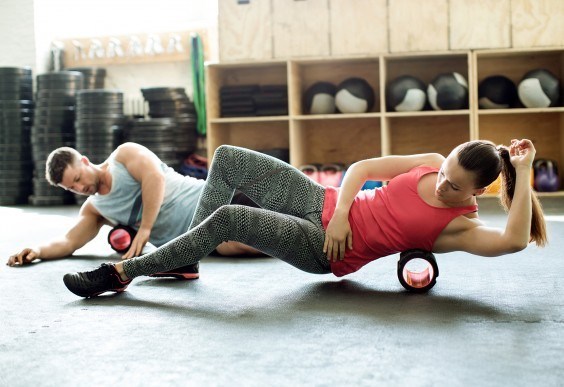
It’s all in the name really, it is a cylinder of dense foam that you roll around on to massage out any muscle tightness. You place the roller on the floor and the offending body part with the tight muscle on top of the roller, then using your body weight to apply pressure and the limbs not being rolled out to help move you over the roller you roll up and down. It can be pretty uncomfo
 rtable to start off with but if it is used with a manageable amount of pressure, and regularly, you can really start to feel it working and it becomes less torturous. If you are new to exercise you can build some pretty good upper body and core strength just from trying to move yourself around over the roller.
Massage Ball
These come in all different sizes and textures. They can be used in a similar way to a foam roller or even used up against the wall or on a hard chair. They are great at getting into smaller, more specific areas than the foam roller such as glutes and around shoulder blades. You can also use a ball for some areas with just the pressure of your hand – such as rolling it over forearms. It can be great for massaging the soles of your feet too, just place it on the floor and roll a bare foot over it.
Tip: using them up against the wall is nicer and easier to manipulate than on the floor. Place the ball in a long sock or pair of tights and throw it over your shoulder – that way you have a good handle on it to keep better control and stop it from falling.
Another tip: any firm ball will do – tennis ball, lacrosse ball, squash ball, golf ball, even a decent dog ball – they all have their uses when it comes to self-massage.
Compex
This is an electrical device that you can rent or buy for home use. It can also be used to compliment your gym sessions. It is an electrical muscle stim machine that uses low level electrical currents to simulate your muscles. The Compex machine has many different settings and can be used for strengthening, improving circulation, post exercise recovery, and pain management. We have got several machines available to rent on a monthly basis from The Physio Clinic and you are able to purchase a Compex machine from us. For more information call 01454 854466.
Massage Gun
Not as scary as it sounds. Massage guns come in a variety of sizes now from more industrial heavy duty (we have 1 in clinic, come and have a try!) to lighter more compact travel options. A firm massage head, usually in the shape of a ball about golf ball size, moves in and out of the massage gun at high speed, providing targeted massage to areas of tension or soreness. This targeted approach allows you
to have complete control as to how much pressure you use, working to increase blood flow, improve range of movement and reduce soreness.
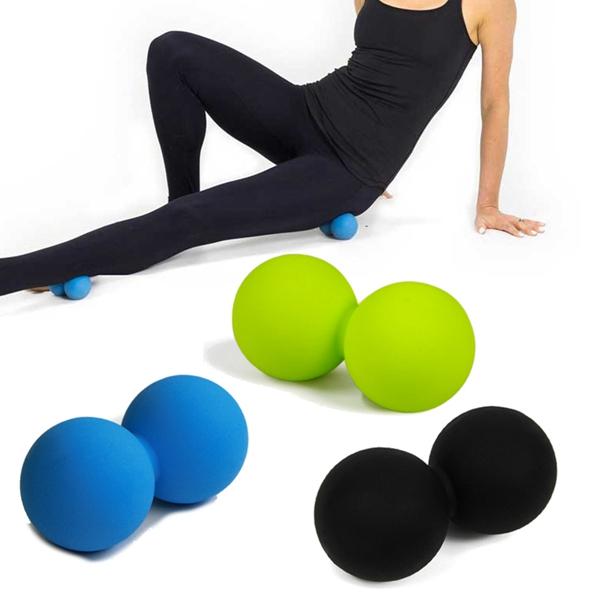
Peanut Ball
This is a peanut shaped ball, again they come in varying sizes. Some people find these easier to use as they are less inclined to roll away and can be easier to keep control of. They are also great to get down either side of your spine without putting too much pressure on the bony bits in the center of your back. They are used in the same way as a foam roller or massage ball.
Tip: taping 2 tennis balls together can be a great homemade version to trial.
Massage Stick
If rolling around on the floor isn’t really your style then a massage stick is a great alternative.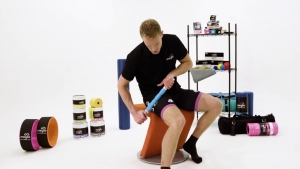
They can be great to apply pressure to areas that you can’t quite get to with a ball or foam roller, or that needs a bit more precision to pin down the right muscle. They require you to use your hands on either end of the stick to apply pressure and direction and work similar to a rolling pin. Tip: you can actually just use a rolling pin
All of the above gadgets vary in size and material. They range from smooth and fairly soft for a more gentle approach to knobbly, spikey hard plastic for a more intense experience.
They all work on the idea that the smaller the surface area you are working with the deeper you will get into the tissue. If you choose a small hard ball to roll on you will be able to work deeper into the tissue, but done too soon this may be too uncomfortable. It takes time and repetition to loosen of muscle tension and needs to be done gradually. Many people who find this kind of self-treatment beneficial will start with what’s manageable and progress to something more intense as their muscles get looser.
Trigger Point Stick
This is a specially designed stick to help you apply pressure on those hard to reach trigger points around the backs of your shoulders. It can also be used on other areas too. It is a big long S shaped stick with nodules on and the specially designed shape makes it easy to apply pressure to those hard to reach areas with minimal effort.
Tip: A homemade version of this can be to use the top of a hooked walking stick or a curved umbrella handle.
If there is any area of your body that you think would benefit from some regular self-massage but are finding that the above gadgets are not hitting the spot then have a shop around online – someone will have invented something. These are just an example of the most mainstream and versatile gadgets that we commonly find ourselves recommending to patients.


