
How can process goals help you return to hobbies & sports
Sports Psychologists often use a concept called ‘Process Goals’ in order for athletes to not let negative thoughts become detrimental to their performance during a race or competition. If ‘x’ starts to happen, I will do ‘y’. Our physio Jenny, also a swimrun athlete and triathlete, discussed this with a Sports Psychologist while on a swimrun training camp in Croatia. She realised this progress can be applied to many other aspects of life, including rehabilitation from injury.
What is a Process Goal
A process goal is a specific focus on an aspect of performance, or task. It can be focused around strategy, body form, or any other aspect needed to perform a skill more successfully. It is particularly helpful in a sporting situation when something starts to go wrong, allowing the athlete to focus on the solution for that process and therefore still achieve the goal / objective of that set task. For example, in swimming if the sea gets rough, continue to focus on keeping a high elbow in the catch phase of the pull, or a cyclist struggling with a headwind focusing on maintaining a smooth pedal stroke. With these small focused goals on a set process, the athlete has a more control over the outcome.
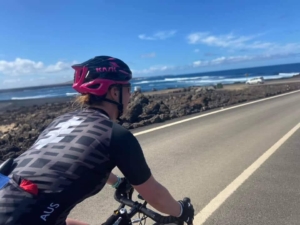
How can we link this to return to hobbies & sports?
When you have had an injury or illness, you may have been out of your sport for a while. The return to full fitness, and where you were before can feel a long way in the past. You might even be doubting if you can get back. Add in the pressure of an event you have entered, and the negative thoughts can take over. What if the injury comes back? What if I’m too slow? What if I don’t finish?… By acknowledging that these concerns are real, and establishing a process goal to overcome them, we can continue to move forward with progress.
How to create your Process Goals
Everyone’s situation is of course different, so there is no set list. Even within the same sport, what is a concern to you may not have even crossed the mind of another. You need to create an ‘If / then’ list – If ‘x’ happens, then I will do ‘y’.
For example – You are taking part in your first half marathon trail run after developing ITB problems and ‘runners knee’. You get 10km in, and after a technical section start to feel some discomfort around your knee. Your process goal may be to slow to a walk, stop, take a couple of seconds to complete a glute stretch (you have used this in your rehab, so know that it helps) and before then walking and returning to running.
| If… | Then… |
| Start getting knee pain | Stop to stretch glute |
| I take longer than planned, the aid stations aren’t frequent enough | Take more of own water / snacks for independent fuelling |
| There’s a long downhill section my knee might hurt | Use hiking poles to off load your knee in these sections |
Even before ‘race day’ though, you can use the same process:
If I’m not fit enough…. Schedule unnegotiable time each day to complete your exercises (strength / stretches etc) Eg: ‘If’ the kettle is on, ‘then’ I will complete my stretches
If I’ve done too much my back might spasm …. Break up weight bearing tasks over the day so you still achieve your tasks but with rest in between. ‘If’ I have done the vacuuming, ‘then’ I will wait until the next day to clean the bathroom.
‘If’ I start to feel swelling and pain, ‘then’ I will apply ice for 15minutes
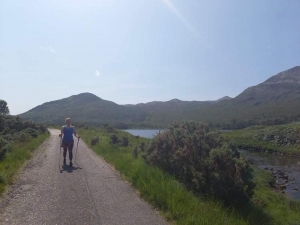
Over to you!
It doesn’t matter how small the concern, write it down, then write down what you can do about it to change and take control of the situation in a positive way.
Need help… that is ok too! Speak to your physio, they will listen to your concerns and help you to set solutions. Good luck!


