
What are plyometrics?

Plyometrics are a form of training that often require fast lengthening of a muscle before a contraction to perform a movement. They often involve jumping, bounding and hopping in various different activities. Hopscotch is the perfect example of this form of exercise used during our early years. This form of exercise is regularly performed in an elite sport setting to help to reduce injury but also improve performance.
How do plyometrics work?
When performing plyometric movements, muscles will go through a stretch as well as an accelerated shortening contraction. During the lengthening / stretching phase, energy is stored within the muscle and the connective tissues, then as the muscle goes into a shortening contraction, the energy previously stored is recovered to contribute to the explosive movement. This is likened to the stretching of a spring before a release back to its natural position. The more we use this style of training, the better we become at storing that energy and our ability to release energy quickly to perform a movement.
Why should runners use plyometrics in their training?
The benefits are clear for basketball players and long and triple jump athletes as to increase their ability to jump vertically or for distance. But why should it have a place in your run training routine?
 A large focus of plyometric training is being able to produce the most possible force with the least amount of ground contact time, whilst not losing all the energy you’ve created into the ground. Sound familiar? This is exactly what we go through with running. It’s all about becoming efficient with each contact we make with the floor and taking that efficiency in to the next stride. So, whether you’re struggling for speed with your runs or find yourself having heavy contacts into the floor, plyometrics could take your running to the next level.
Where to start?
There are no official requirements to start plyometric training, however those who have experience in running and have also participated in some form of strength training will be at a good level to start adding plyometrics to their routine.
If you’re interested in learning more about how to apply plyometric training to your run training safely and effectively, contact the clinic on 01454 540066 to book a gym session with Dan.


Couch to 5k is a great way to start out running or even to get back into running after some time off. It is a program that is designed to get you from doing no running at all to being able to complete a 5km run within approximately 9 weeks. This is done with a graded training plan requiring 3 sessions per week of 30 minutes. It is based around a basic return to run program of intervals of walking and running. It starts off with lots of walking and little bits of running and progresses you up to being able to run for 5km or 30 minutes without walking. It was started as an initiative to get people more active and to make running more accessible to non-runners. Lots of different people have taken on the idea and written a couch to 5k program so there are now lots of variations available. Some are in the form of a document you can print out and others come in an app you can take running on your phone. This makes them very accessible, but it does also mean you need to exercise caution when choosing which to use. Not all programs are the same and not all programs will suit you or your training level.
We will use this as an opportunity to go through some of the things you need to consider when selecting your running program.
– Check ahead through the whole program before you start. Don’t get caught out by a program that seems to start gently. To get you running within the promised time scale there may be a sudden big step up in training in the middle of the program. This is a recipe for disaster if it is too sudden.
– The couch to 5k program only focuses on the running training, there is no time built in for any other strength and conditioning. Many programs barely even include a thorough warm up or cool down. You may need to jazz up your program to make it personal to your needs and to include some much needed flexibility or strengthening.
– Couch to 5k is for people who are not currently running to get into running. It assumes that you are already of a level of fitness that is able to tolerate running. It is too literal to think that you can go from couch potato to 5k runner just by following the program. To be able to stick to a running program and not get injured it is essential for your body to have some level of strength and fitness prior to starting. If you feel you may potentially fall in or near the couch potato category it is best to spend 6-8 weeks prior to starting your couch to 5k program doing some basic strength and fitness work.
– For this same reason it is not well suited to the very unfit or the very overweight. Again, a specific fitness / weight loss program of graded low impact exercise will be necessary to get you to a level that is safe to start any running program. Activities such as walking, cycling, or swimming would be a better choice of activity to start with.
– For many people it will be necessary to adapt the couch to 5k program to make it more gradual and over a more drawn out period of time. This will give you more time for recovery and for your body to adapt to the new stresses, and it will give you a better chance at achieving your goals. This can be done by simply repeating some weeks before progressing onto harder sessions; or by adding in extra rest days to accommodate recovery or other required strength and conditioning sessions.
– It is normal and common to get soreness when starting out running and after hard sessions. Doing some simple stretches and maybe using a foam roller can help you to manage this. This will be something that you have to accommodate for within your program. If you are still sore from a previous session it is not wise to keep going. Take time to recover and stretch before continuing to progress. This may be a good time to repeat some easier sessions in stead of progressing. 
– Its ok to miss a day. Don’t let it throw you off course. And don’t try to just miss it out completely. If you start to struggle doing 3 runs per week then put more rest days in between and make sure to work on some basic strengthening and stretches on your off days. If you miss a day then pick up where you left off. It is better to set it back and prolong the program than it is to skip sections and not give your body enough time to adapt.
– being able to run 5k isn’t everybody’s goal. Some people start running as they have signed themselves up for an event and need to achieve a different distance. Others just want to be able to run and a specific distance isn’t a necessary goal. There are other companies out there that have similar plans and programs to get you running. Do some homework and pick something that is best suited to you and your goals. Some examples to check out would be ‘Jeffing’, or the ‘None to Run’ program.
Everybody is different. We all adapt and change at different rates. There is no one size fits all. Do what feels right for you and progress at your own rate. You will get there.

When you’re doing a run training program for a marathon, you will have several run sessions per week, some of which will be long and take hours out of your day, giving you less time to dedicate to strengthening. However, you need to be strong to be able to withstand the increasing demand of upping your mileage as your training progresses. Using your time wisely and getting into a strengthening program before you need to start thinking about how you are going to get the miles in, is your safest bet to build a solid base to build those miles.
It is not enough to think you can rely on gradually getting stronger as your miles rack up. A marathon program will push anyone to their limits and should be respected. Training is specifically designed to challenge your stamina and endurance, as this is what most people will need to work on to complete the marathon distance. However, distance running training programmes are generally not designed to build strength or power.
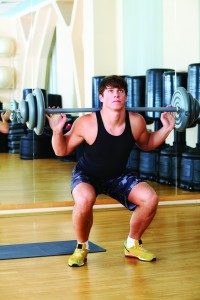 Strength is different from just tapping out the long miles and requires a different type of training. Not many peoples’ bodies, or diaries, will be able to tolerate the demand of introducing both increased mileage and strength training at the same time. That would be a prime recipe for injury! as would not doing strength training at all.
It gives the body a gradual ramp-up of loading and a chance to get used to being under more physical stress. If you are a seasoned marathon runner who knows they have the miles in them then strength training will likely be the thing between you and a new PB for next season.


